
An own platform is an iGaming infrastructure built and maintained in-house by the operator rather than leased from a third-party provider. Unlike white-label or turnkey setups, a custom-built casino platform gives the operator full ownership of source code, player data, payment integrations, and the product roadmap. It represents maximum control — but also maximum responsibility. Building a proprietary platform is the most capital-intensive path to market. Yet for operators with established revenue streams and clear differentiation goals, it can be the most economically sound long-term choice, eliminating ongoing revenue-share obligations and unlocking full flexibility over the GGR-to-NGR chain. An own platform is a fully proprietary technology stack purpose-built for a specific operator’s iGaming business. The operator — either through an internal engineering team or a contracted development partner — creates and owns the core software that powers the casino or sportsbook: the player account management (PAM) system, back-office administration, CMS, CRM, bonus engine, payment gateway layer, reporting and analytics modules, and the integration framework for third-party game content. Ownership means the operator holds the source code (or has it in escrow), controls deployments and infrastructure, decides the product roadmap, and retains all player data. This stands in contrast to white-label arrangements — where the provider owns the platform and the operator simply brands it — and turnkey solutions, where the operator gains more customization but still depends on the vendor for core technology updates. The operating model of a custom-built platform follows a series of interlocking phases. Architecture and development. The operator’s engineering team designs a modular tech stack — typically a microservices architecture hosted on cloud infrastructure (AWS, GCP, or similar). Core subsystems include player registration and KYC verification, wallet and transaction management, a bonus engine, a CMS for front-end content, and an analytics/reporting layer. Game content integration. Because building proprietary games is rarely practical at scale, operators integrate third-party content via a game aggregator or direct API connections with game studios. The aggregator approach consolidates hundreds of providers under a single integration, reducing engineering overhead. Payments and compliance. The operator directly contracts with payment service providers, establishes its own deposit flow logic, and implements KYC/AML procedures in line with the regulatory requirements of each licensed jurisdiction. Unlike a white-label model, there is no intermediary standing between the operator and its PSPs or the regulator. Licensing. A proprietary platform operator must obtain and maintain its own gaming license — whether from the UKGC, MGA, Curaçao, or another authority. Licensing timelines range from a few weeks (offshore jurisdictions) to 6–18 months (tier-one regulators such as MGA or UKGC), and costs can span from €25,000 to well above €500,000 depending on jurisdiction and license type. Ongoing operations. After launch, the operator is responsible for uptime, security patching, feature development, regulatory reporting, and platform scaling. There is no vendor SLA to fall back on — the team owns every incident. Large-scale proprietary operators. Major publicly listed gambling groups (such as Flutter, Entain, or Kindred) invest heavily in proprietary technology precisely because the economics at scale justify full ownership. Revenue-share savings on billions in GGR compound into significant margin gains. Mid-market operators migrating from white label. A common trajectory is to start under a white-label license, build a player base, generate steady GGR, and then migrate to a proprietary stack. The trigger is typically the point at which the 10–20 % revenue share paid to the white-label provider exceeds the annualized cost of owning and running the platform in-house. Full data ownership. The operator controls the entire data pipeline — from raw event logs through cohort-level analytics. This enables granular segmentation, predictive modelling, and direct measurement of every dollar flowing from GGR through to NGR. Margin control. Eliminating the provider’s revenue share (commonly 10–20 % of GGR under white-label terms, or 5–15 % under turnkey contracts) directly improves the NGR margin. At scale, this difference can represent millions in retained earnings annually. Product independence. The product roadmap is entirely internal. The operator can deploy new features, enter new verticals, or integrate emerging payment methods without waiting on a vendor’s development cycle. Regulatory flexibility. Multi-jurisdictional operators can adapt compliance modules per market — adding specific KYC workflows, responsible-gambling tools, or reporting formats — without negotiating vendor scope changes. Competitive differentiation. A proprietary front-end and UX, bespoke gamification mechanics, and unique CRM triggers allow the brand to stand apart from competitors who share the same underlying white-label or turnkey template. High upfront capital requirement. Industry estimates place full custom-platform development at €250,000–€500,000 and above, with total costs easily exceeding several million dollars when licensing, infrastructure, staffing, and initial marketing are included. Development timelines of 12–24 months are common. Operational burden. The operator assumes full responsibility for server uptime, cybersecurity, DDoS protection, PCI-DSS compliance, software updates, and incident response. A single prolonged outage directly impacts revenue and player trust. Talent acquisition and retention. Running a proprietary platform requires skilled engineers, DevOps staff, compliance officers, and product managers — all competing in a tight iGaming labour market. Licensing complexity. Holding licenses in multiple…
Articles
Analysis, guides and market insights from the Blask team
KnowledgeOwn platform (custom-built casino platform)


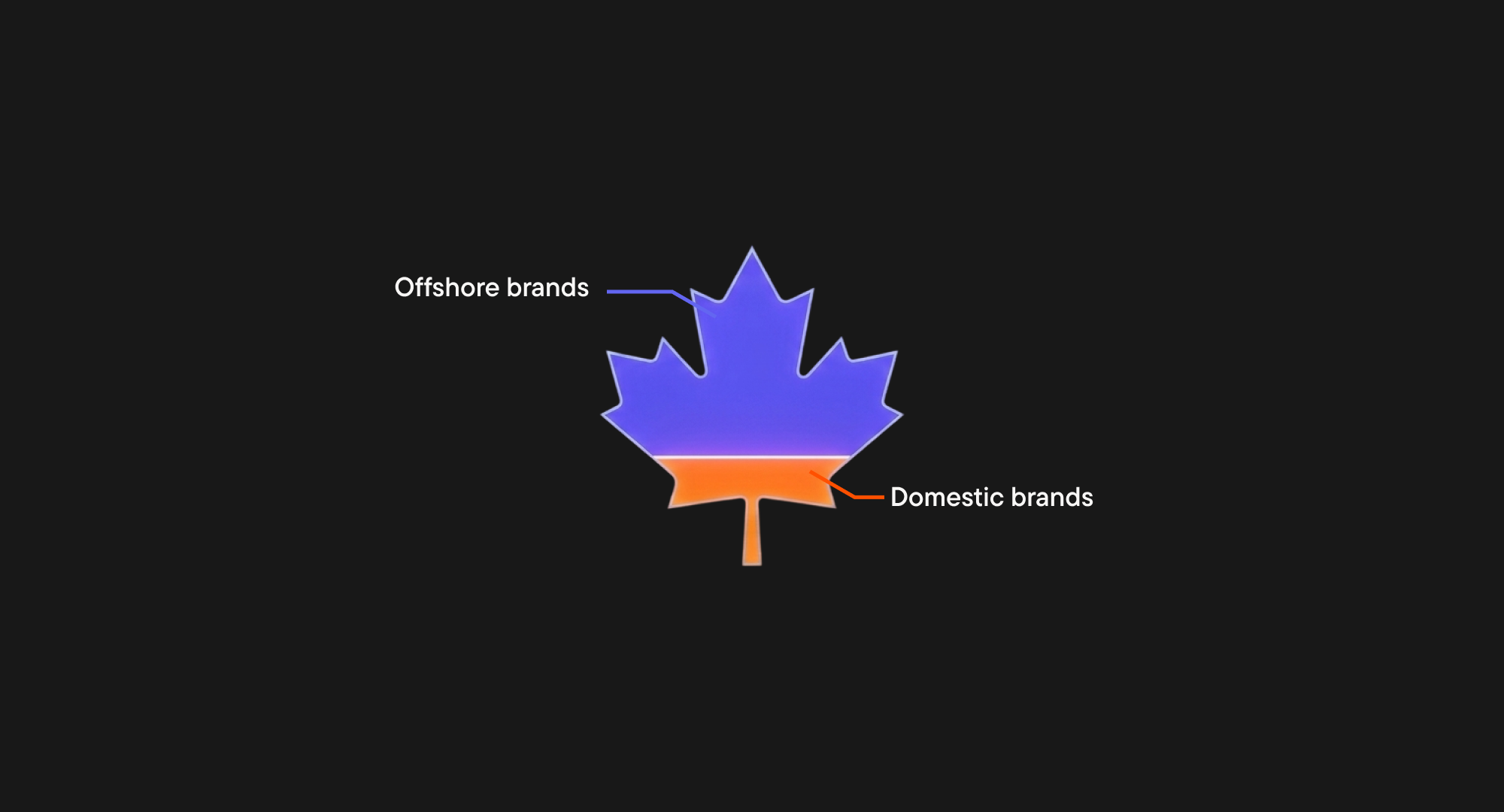
MarketsCanada’s iGaming market: mostly offshore
Provinces transitioning to an open market are set to solve a channelisation problem that monopoly regulation never did.








BlaskHow Global TV Experts used Blask data to help uplift client response by ~10%
Lee Allard, Head of Performance at Global TV Experts, on combining iGaming market intelligence with TV advertising expertise to deliver measurable results.