Negative carryover is a contract clause, and whether a losing month follows an affiliate into the next one is decided by one sentence in the affiliate agreement. Published programmes write that sentence in incompatible ways. A negative balance arises because revenue share commission is calculated on net gaming revenue, and NGR can be negative. Referred players who win more than they stake across a month produce negative gross gaming revenue, and bonus costs, fees and chargebacks are then deducted from an already negative figure. FDJ United Affiliates, the programme formerly operating as Kindred Affiliates, sets out both the default and the exception in a single clause. Under section 6.16 of its global terms dated March 2026, where an affiliate’s customers produce a negative balance “due to the customer winnings and/or bonuses etc., the said balance will be carried over to the next month, unless the Reward Plan has been adjusted to a no negative carryover Reward Plan, which must be approved by the Company’s Head of Affiliates”. Where that adjustment is made, “any negative Commission balance will be set to zero at the beginning of each month”. Two things follow from that drafting. Carryover is the standing position and NNCO is an exception granted at a named internal authority, and the monthly reset is contractual rather than automatic. Affiliate marketing agreements that leave the point unstated leave the treatment to whatever the tracking platform is configured to do. The clause also has to define the population the balance is calculated over, and published terms differ at every level. At programme level, a single balance can pool every brand and vertical an affiliate promotes. EGamingOnline states the opposite position explicitly: “For all our Casino Brands we do not carry over negative balances. Furthermore, we separate our Brands for payment purposes, meaning negative results at one Brand won’t affect your positive results at the others (no bundling)”. The same clause carves out one case — where a single affiliate holds several accounts promoting one brand, a negative affects all accounts in that group. At player level, a cap limits how much of one large winner reaches the rest of the portfolio. Narnium’s published terms classify a player as a high roller once their individual negative NGR contribution passes €5 000 in a calendar month. Terms cap that player’s negative contribution at €5 000 for commission purposes, and state that the excluded balance “does not carry forward and does not offset positive revenue generated by other referred players in the same or future periods”. That is a write-off rather than a quarantine: the excess leaves the calculation instead of being tracked against the same player’s future revenue. Alpha Affiliates publishes a capped carryover rule and works it through with its own figures, which makes the mechanics auditable against the contract rather than an illustration. The rule has two limbs. A negative monthly NGR down to −€10 000 is not carried into the next accounting period. Below that, the balance carries forward with €10 000 absorbed by the operator. Brands are paid separately and are not bundled [4]. Applied to the three-brand month the terms set out — brand 1 at −€13 000, brand 2 at +€4 000, brand 3 at −€3 000 — the next period opens as follows: On 50% revenue share, the affiliate could be paid €2 000 for brand 2 and nothing for the other two, because per-brand payouts do not sum. A programme applying uncapped, bundled carryover to the same activity would open the next period at −€12 000 across the account and pay nothing. The size of a carried deficit depends on the NGR definition above it, and deduction lists are programme-specific. Alpha Affiliates publishes NGR as revenue less 15%, less bonuses, less 5% of deposits plus withdrawals [4]. Narnium defines NGR as GGR less bonus costs, applicable gambling taxes and confirmed fraudulent transactions, then applies a 10% administrative fee before the revenue share percentage. Identical player activity produces different deficits under those two definitions. Reversals compound the effect: a chargeback booked after settlement reduces a later period’s NGR, which under carryover terms can reopen a deficit after the period that produced it has closed. Carryover interacts with the commission structure rather than sitting apart from it. An affiliate commission tier ladder raises the revenue share percentage once a threshold is crossed, and under carryover the higher rate applies to earnings that must first clear an existing deficit. Hybrid deals split the exposure, because the CPA leg pays on qualified first-time depositors and is not reduced by a negative revenue share balance unless the agreement says so. Negative carryover is one sentence in the commission section, and it decides what a revenue share percentage is worth over a year. The terms quoted here disagree on the default, on the population the balance covers and on the deduction list beneath it, which is why the rate and the clause cannot be read separately.
Articles
Analysis, guides and market insights from the Blask team
KnowledgeNegative carryover (NCO)
















StrategyWhy iGaming markets don’t grow in straight lines
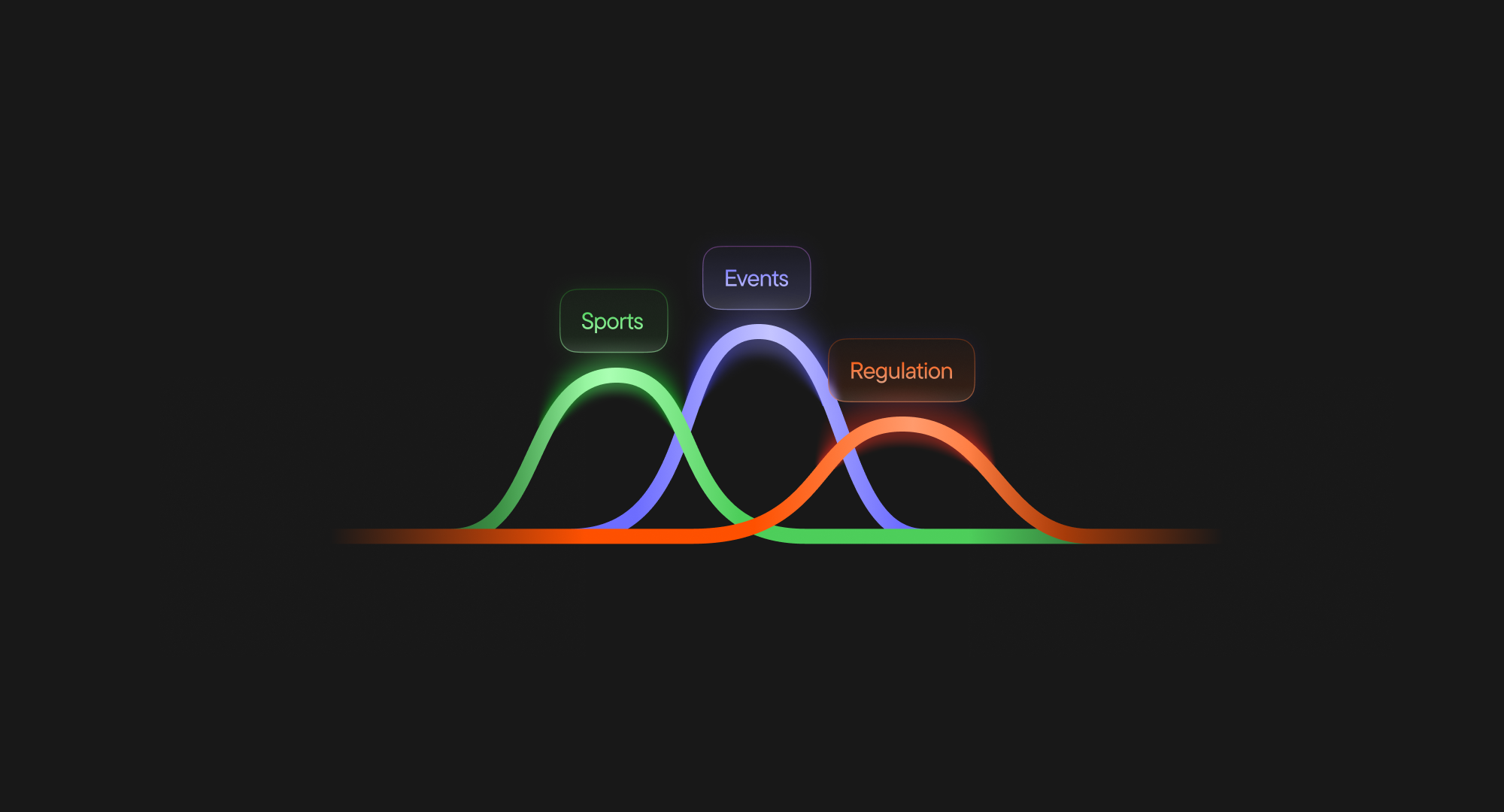
How sports calendars, cultural events, and regulation cycles shape demand waves across regions.